Scalp massage
Contact with the scalp, often using the fingertips.
Ask about Pressure, focus areas and whether products are used.
Hair, scalp & everyday comfort
Scalp massage, gentle hair touch and a wash-based head spa are different requests. Before choosing a session, decide where you want the attention, whether products are welcome and how you want your hair to feel afterwards.
Understand the differences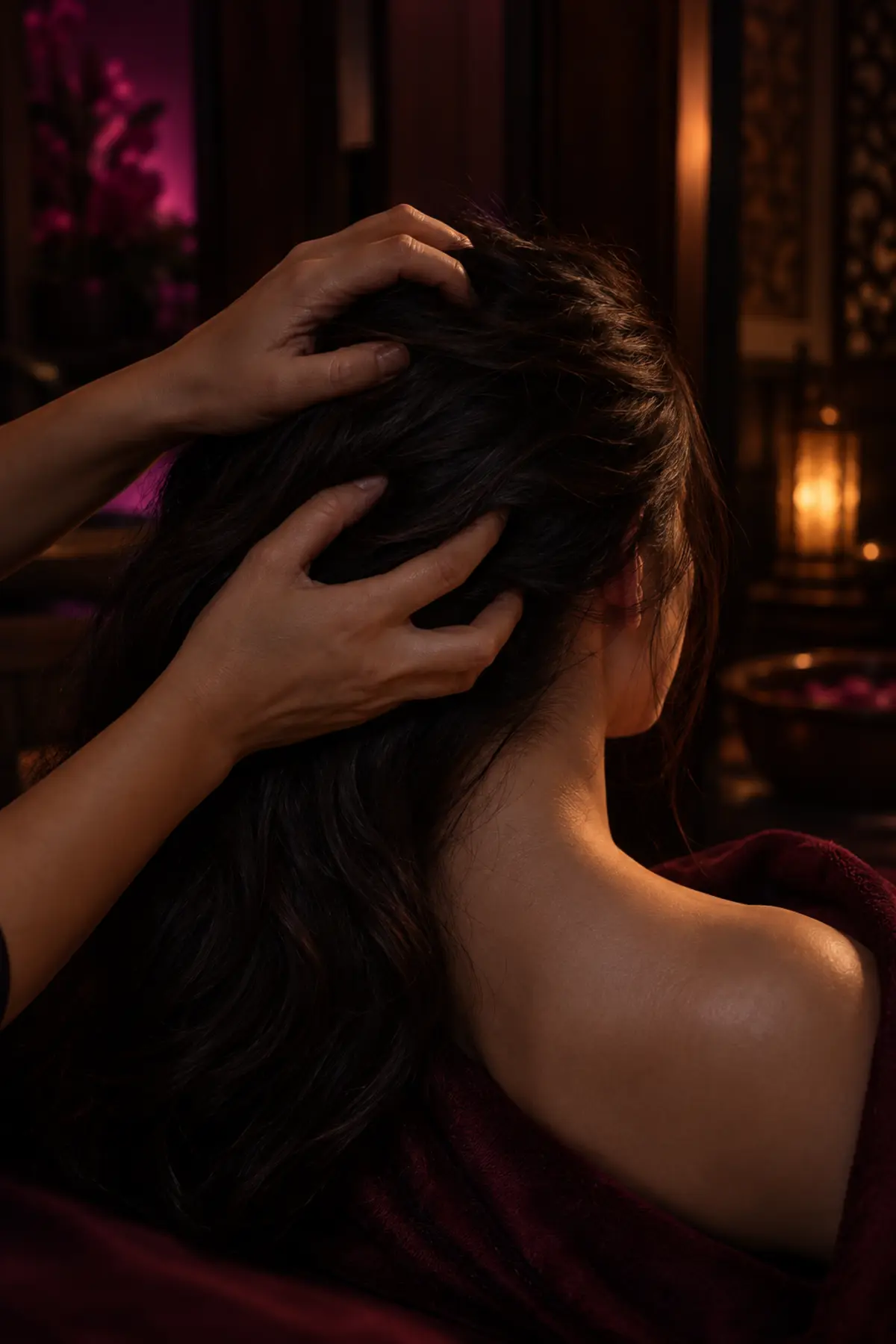
Scalp massage means contact with the skin beneath the hair. Hair touch means handling the strands. A head spa may add washing and hair-care products. The name alone does not tell you what a particular provider includes.
Ask for the actual sequence: will the hands stay at the hairline and scalp? Are the neck and shoulders included? Is there a wash basin? A concrete description is more useful than choosing by the treatment name alone.
Contact with the scalp, often using the fingertips.
Ask about Pressure, focus areas and whether products are used.
Gentle handling or movement of the hair.
Ask about Which strands may be moved and which styles or attachments should be left alone.
A session involving washing or rinsing, with other steps depending on the provider.
Ask about The treatment sequence, wash facilities, products and whether drying is included.
If you want your hair left without added products, say “dry and product-free”. Asking for a light massage is not the same thing: light describes pressure, not whether oil, water or other products will be used.
If a product is proposed, ask its name, ingredients and where it will be applied. Mention known sensitivities. Decide whether you are comfortable leaving with residue in your hair and whether you have somewhere to wash it out afterwards.
Between a beach visit and an evening out, those details can matter more than the name on the menu. Do not assume a mobile appointment includes shampooing, towels, a basin or a hairdryer.
Extensions, braids, a wig or a recently arranged style need a specific conversation. Point out attachment points and explain whether moving the hair is acceptable. Follow your own stylist's aftercare directions before agreeing to products or handling near attachments.
Agree on your position too: seated or lying down, with your head comfortably supported. Ask for a change if your neck feels awkward. Simple instructions work well during contact: “less pressure”, “no pulling”, “skip the temples” or “stop here”.
You do not need to feel tingles, fall asleep or enjoy every sensation. Your comfort is the useful measure. A head-focused appointment should stay within the areas you have agreed.
A map pin identifies a property; it does not explain how to reach the room. Before arranging any visiting practitioner in Bali, check the property's visitor policy, reception procedure and access to the space you plan to use.
Ask what equipment is brought and what you need to provide. A chair or surface needs to suit the agreed position, including support for your head. If washing is involved, discuss the basin, water, towels and drying arrangements separately.
This guide concerns nonsexual relaxation and practical preparation. It does not establish that scalp massage regrows hair, treats a scalp condition or resolves a headache.
The US National Center for Complementary and Integrative Health advises against using massage to delay medical care. If a health problem makes you unsure whether touch is appropriate, discuss it with a qualified health professional. Discomfort is a reason to pause.
Read the NCCIH guidance ↗The details people ask about
Not necessarily. Scalp massage, hair touch and a wash-based head spa are different requests. Ask explicitly about water, shampoo, rinsing and drying; none should be assumed from the word massage.
Yes, you can state that preference. Confirm that the provider can follow it before arranging the session. Gentle and light describe touch, not whether products are used.
Explain the style and attachment points first. Say which areas should not be moved or pulled. If you are unsure about your hair system, ask the person who fitted it before allowing it to be handled.
A session confined to the scalp and hair does not require undressing. Agree on the exact areas involved so a head-focused session is not confused with a broader treatment.
No. A wellness massage is not a diagnosis or treatment plan for hair loss, pain or a scalp condition. This guide makes no claim that it can replace medical care.
The preparation checklist is editorial guidance. It does not claim that a particular provider supplies equipment, products or a specific treatment.
The health-care limitation above refers to NCCIH: Massage Therapy – What You Need To Know. This is general massage guidance, not evidence of a specific benefit from scalp massage.
Published by Ritual Bali. Updated . The photograph illustrates the topic; it does not identify Ritual staff or premises.